Sunday, October 27, 2013

Updated Jazz Now From Rs 5 5 Lakh


Honda has launched a refreshed version of the Jazz and has also announced a major price cut. The refreshed Jazz is now over Rs 1.5 lakh cheaper than the outgoing model.  
The base Jazz now starts at Rs 5.50 lakh whereas the earlier model was priced at Rs 7.12 lakh. The mid-level Select version is priced at Rs 5.75 lakh (Rs 7.24 lakh earlier) and the top-end Jazz X is priced at Rs 6.06 lakh which was Rs 7.48 lakh for the outgoing model. All prices ex-showroom, Delhi
The updated Jazz features exterior upgrades like re-styled bumpers and lights and a new paint shade while interiors get dual tone (beige and black) shade, a height adjustable driver seat, and power retractable outside rear view mirrors for the top-end version. USB-interface is now standard now on all variants. The Jazz Select and Jazz X gain a new feature for the rear seats that now can be reclined as well.
The powerplant, 90bhp 1.2 litre petrol motor remains unchanged. 


Updated Jazz Now From Rs 5.5 Lakh

Read more »

Friday, October 25, 2013

Lamborghini Urus concept Review Price Interior Exterior

 Information Specification Modification Image Review Lamborghini Urus

Lamborghini needs a third model, one that will attract a different kind of customer than the Gallardo and Aventador. If brand president and CEO Stephan Winkelmann gets his wish, it will look just like the Lamborghini Urus concept being unveiled at the 2012 Beijing auto show.

"I personally think this is a good pick," said Winkelmann at an exclusive preview staged at the companys SantAgata Bolognese factory in northern Italy. At a second preview during the New York auto show, he added, "We want to do this car. We believe it is the right direction."

At the time of our first encounter, the Urus super-SUV concept had only a codename: LB 736. The dull alpha-numeric belonged to one of the most extreme SUV shapes ever created. The team decided from the start that it wouldnt do another "Rambo Lambo" LM002, but instead a vehicle for the modern SUV buyer. The concepts width, low roofline, and short overhangs imply handling and speed in a class apart. Yet the Urus is also unmistakably Lamborghini. The crisply creased surfacing and angular details link it to the brands current supercars, and theres even an echo of Countach to the cut of its wheel arches, a detail in which the designers take pride.


In terms of styling, the Urus echoes the canned Estoque saloon concept with an angular design. Bosses say it will be the world’s fastest-accelerating and best-handling SUV, although they have yet to confirm what engine will sit under the bonnet.

It could potentially use a modified version of the VW Group’s new 4.0-litre twin-turbo V8 or a 6.0-litre W12. Both of these engines are used in the latest Bentley Continental GT.

Whatever engine powers the production version, Lamborghini is targeting a 0-60mph time of around four seconds. And although the company says the top speed for an SUV is “not really relevant”, it’s likely to reach well over 180mph.

Like the Aventador, the Urus uses carbon fibre for its chassis and body, and the company claims it’s 100kg lighter than even an aluminium model would be. “With this style of machine, lower weight is the new power,” said R&D boss Maurizio Reggiani.


Lamborghini isnt saying much about the proposed engine for its new SUV, only using the 600-hp output as a guidepost. The ute at the China motor show is a running prototype, although the final engine hasnt been specified.

Autoweek has learned that Lamborghini expects to give the production version of the Urus a modified version of parent company Audis new turbocharged 4.0-liter V8 direct-injection gasoline engine in combination with an electric motor that has plug-in capability. Power likely will be channeled through a seven-speed dual-clutch gearbox and a torque-sensing four-wheel-drive system with an electronically operated torque-vectoring system.
source:motortrend.com,autoweek.com,autoexpress.co.uk

Read more »

Wednesday, October 23, 2013

All New 2014 Porsche 911 GT3 Breaks Cover Ahead of the Geneva Auto Salon

What we have here is the first batch of official images of the all-new, 991-generation, Porsche 911 GT3, revealed in advance of the cars world premiere at 83rd Geneva International Auto Show in Switzerland this Tuesday.

2014 Porsche 991 GT3

2014 Porsche 991 GT3

2014 Porsche 991 GT3

2014 Porsche 991 GT3

2014 Porsche 991 GT3

2014 Porsche 991 GT3

Were still lacking official details, but from what weve heard, the new 911 GT3 will feature a high-revving normally aspirated flat six with a displacement of 3.8-liters producing around 450-horses (about 50hp more than the new 911 Carrera S) connected for the first time to Porsches dual-clutch PDK transmission, instead of a manual gearbox (though, it could be offered as an option).

The most focused 991 model yet, sports a new exterior bodykit with a lowered front bumper featuring a lip spoiler that wraps up to the wheel arches, different mirrors and headlamps, side skirts, a bespoke rear bumper with a diffuser and central exhaust pipes, plus a rear wing and its own alloy wheels.

The interior of the GT3 is dressed in a combination of black leather and Alcantara surfaces accented with red stitching.

Stay tuned, as well update this post as soon as we get an official word from Porsche.

Read more »

Monday, October 21, 2013

New Opel Combo in Passenger Car

Meet the new Opel Combo, GM Europe’s latest offer in the light commercial vehicle segment that will also be available in a passenger car version.
In case you didn’t notice, Opel’s newcomer is based on the Fiat Doblo van with the exterior styling changes over the Italian model limited to the design of the front bumper that somewhat awkwardly incorporates the German firm’s family grille.
The previous generations of the Opel Combo van shared their platforms, interior components and body panels with the Corsa, but last year, GM signed a contract agreement with Fiat for the supply of several commercial vehicles including the Combo.
The Fiat-based Combo will be offered in a variety of models. For example, the panel van will be available with a a choice of two wheelbases, measuring 2,755 mm or 3,105 mm long and providing an overall vehicle length of 4.39 and 4.74 meters respectively, as well as two roof heights, 1.85 m or 2.10m.
Opel said the short-wheelbase model offers up to 3,800 liters of cargo space with the seat folded down, while the long-wheelbase version, up to 4,600 liters.The passenger car model will be available as a minivan with five or seven seats and a paneled or glazed body.
There are six available engines including four diesel, one gasoline and a CNG (Compressed Natural Gas) unit.
The diesel range comprises 1.3 CDTI and 1.6 CDTI motors, each with 90HP, as well as a 1.6-liter CDTI variant with 105HP and a 2.0-liter CDTI unit delivering 135-horses.
The 1.4-liter gasoline engine produces 95HP, while the CNG version, which runs on natural gas, is rated at 120-horses.
The gasoline and 1.3 CDTI engines are equipped with five-speed manual gearboxes, while the CNG engine and the more powerful CDTI units have a six-speed manual gearboxes. The 90HP 1.6 CDTI is also offered with Opel’s ’Easytronic’ automated five-speed manual transmission.
A Start/Stop system is offered on all powertrains expect the CNG and the 90HP 1.6 CDTI when equipped with the Easytronic transmission.
The new Opel Combo goes on sale in Europe this autumn.


PHOTO GALLERY


Read more In Cars
Read more »

Saturday, October 19, 2013

Tata Vista D90 vs Hyundai i20 CRDi vs Fiat Punto 90HP


We find out which of these powerful diesel hatchbacks is the best.

Tata Vista D90 vs Hyundai i20 CRDi vs Fiat Punto 90HP

Overview

The traits usually associated with diesel hatchbacks are fuel efficiency, practicality and common sense. The three hatchbacks here, however, look to add a bit of spice, all the while retaining their core attributes. These cars are for people who want a bit more power without sacrificing the cheaper running costs of a diesel.

Meet the Fiat Punto 90HP, Hyundai i20 1.4 CRDi and the new Tata Vista D90. All three make around 90bhp, and all cost in the vicinity of Rs 7 lakh. Fiat’s Punto, the pioneer of this segment, costs Rs 7.38 lakh. The i20 is the most expensive at Rs 7.62 lakh and the Vista, being a Tata, makes the others look overpriced. It costs Rs 6.83 lakh in this top-of-the-line ZX+ trim. At this price, it is more expensive than the regular Vista, but still seems like good value when you think of how much more the others cost.

The Vista doesn’t enjoy the same premium hatchback image that the Fiat and particularly the Hyundai do. Tata is trying hard to change this – the Vista D90 comes with engine, exterior, cabin and suspension upgrades. But is this enough to take the fight to the others? 

DESIGN & ENGINEERING

If you’ve splurged on the extra diesel horsepower, you naturally want something that looks fast. Nothing in this group looks faster than the Fiat Punto. Everything about this car looks gorgeous – the snub nose, the tiny rear overhang, and wheels that fill out the arches nicely – it’s got Italian passion written all over it.

In fact, the Punto looks so good that the other two look a bit ordinary in comparison. That’s not because they are not trying – the Vista comes with bright colours, smoked tail-lamps and a black roof, and Tata is even offering a dealer-fit sports body kit that alters the bumpers and adds side skirts and a spoiler (not fitted on our test car).

The i20’s recent facelift has really done wonders for the way it looks. The stretched-back headlights, slim grille and sporty chin make it look far more attractive. However, move back and its practical hatch nature is rather evident. The curves and lines don’t look as crisp as the Punto’s minimalist lines.

Of the three, the i20 is the widest, the Indica is the tallest and the Punto is the lowest. Surprisingly, for the amount of space on offer, the Vista has the shortest wheelbase, which serves to show how good its interior packaging is.   

All three cars use the standard small-car suspension formula of independent MacPherson struts up front and non-independent, torsion beam, coil-sprung axle at the rear. All three use disc brakes up front and drums at the rear.

Sports hatch fans will like the fact that the Punto gets 15-inch rims, while the other two stick to smaller, 14-inch ones. And, though it doesn’t feel heavy, it’s the i20 that weighs the most at 1212kg, as against the Indica’s 1180kg and the Punto’s 1144kg.

INTERIORS

The Vista’s upgraded interiors are a step up from the old car. The cabin plastics look plusher and feel more tactile. The best bits are the new multi-function touchscreen audio system that’s great to operate and the dials for the climate control system, which look and feel upmarket. The instrument cluster, borrowed from the Manza, moves to the conventional position ahead of the steering wheel and looks quite good, but the small dials are a bit hard to read. Also, the cheap power window switches, the control stalks and sharp edges around the small door pockets are of iffy quality. Also, the pedals are a touch too high and there is no dead pedal either.

The interiors of the Punto have a bit of Italian flair, but the choice of materials is what lets it down. Though Fiat has improved the quality of the interiors, there are still plenty of hard plastics around. Even worse are the flawed ergonomics. The steering wheel is too close to the driver, the pedals a touch too high and the front seats, which are the least comfortable in this group, lack under-thigh support.

The i20’s interiors are quite sober, but the interestingly detailed steering wheel, the information pod on the dash and the two-tone split give it a bit of character. It feels wider on the inside and the front seats are large and well-bolstered as well. The large dials can be read at a blink, the chunky controls and switches can be used almost blindfolded and the insides have a well-screwed-together feel.

Move rearward and you’ll find that space in the Punto’s back seat is noticeably tighter than the other two. Legroom is tight and the sloping roofline means headroom isn’t generous either. There’s a lot more space in the i20’s rear, but there is a slight lack of thigh support and the flat, hard cushion doesn’t cosset you too well.
Not surprisingly, it’s the Vista that has the most spacious rear seats. The broad cabin makes it easy to sit three abreast and the high-set seat is very comfortable. But in maximising passenger space, Tata has eaten into boot space. At 232 litres, it is the smallest in this group.

The Indica Vista and i20 run nose to nose as far as equipment is concerned. The Indica gets unique features like a touchscreen display with voice-guided sat-nav and a DVD player. The i20 gets kit like an auto-dimming mirror, a reversing camera, auto-folding outside mirrors and an optional six airbags! The Punto’s only standout feature is Bluetooth connectivity, and this is something both the other cars offer as well.

ENGINE, GEARBOX & PERFORMANCE

Both the Indica Vista and the Punto share the proven Fiat-sourced 1.3-litre Multijet diesel engine, pumping out an identical 89bhp and 20.4kgm of torque. What’s more, even the gear ratios on their five-speed boxes are the same.  Despite the variable-geometry turbos they use (which is how they make 15bhp more than the lower-powered Multijet), both have considerable turbo lag, and it’s only when you get past 2500rpm that they really wake up.

The Vista takes 13.9sec to do the dash from 0 to 100kph, while the Punto takes a whole two seconds more – times which are, quite frankly, unimpressive (the less powerful Maruti Swift diesel does the run in 13.6sec). Even the in-gear acceleration is much stronger in the Vista. It takes 11.78 seconds for 20-80kph in third and 13.33sec for 40-100kph in fourth gear. While the Punto takes 12.40sec and 14.23sec for the same. This difference in performance is down to the tuning of the ECU and it’s quite disappointing that Fiat hasn’t perfected this on its own engine, which doesn’t feel like it has an 89bhp motor under the hood.

The 1.4-litre motor in the Hyundai i20 is in a different league. The 1386cc engine is remarkably more free-revving, the power doesn’t tail off suddenly, and the engine spins happily to 5100rpm. Sure, there is some turbo lag, but the boost comes in at a much lower 2000rpm, and this makes all the difference. Performance is pretty impressive, with the dash to 100kph taking 12.88 seconds. The i20 also has the most refined engine here. It’s quiet at idle, smooth when revving and gets a tad noisy only near the redline. Of the other two, it’s the Vista that is more refined, thanks to a new sound insulation package that Tata has installed. 

RIDE & HANDLING

The Vista’s revised spring and damper setting and optimised bushes are small tweaks that have a made a huge difference, and as a result, the Vista now rides really well. The pliant suspension soaks up potholes with ease and even sharp ridges are smoothened out without the passengers getting jarred. It’s fair to say the Indica has the best low-speed ride in this test. Straight-line stability is impressive, but show it an undulating road and it doesn’t feel as flat or planted as the Punto. In fact, the Punto’s overall ride is even better than the Vista’s. At any speed and on all surfaces, the ride is flat with very little vertical movement, which is more than what can be said about the i20. The Hyundai has a soft setup, so the low-speed ride is decent, but it’s not half as competent as the Punto or the Vista when it comes to keeping its occupants isolated from the road. It’s not as stable at speed as the other two either, and in comparison to them, it’s quite clear that Hyundai is quite some way off from perfecting the right ride and handling balance. Adding to the i20’s woes are a steering that is incredibly light and body control that’s rather sloppy.
The Vista surprised us again with its steering feel, which has never been a strong point of Tata cars. Thanks to a slightly stiffer setup than the 75bhp version and a new bigger-capacity hydraulic steering pump, it turns into corners better than before. Sure, you do get some body roll and squeal from the tyres when you push it hard, but the steering feels well weighted and the car feels secure and predictable.
It must be said that the i20 works best as a city car, it is easy to drive thanks to its light clutch, easy gearshift, super-light steering and relatively more responsive engine.

Read more »

Thursday, October 17, 2013

2008 Mitsubishi Lancer Review

Mitsubishi Lancer 2008 GTS

Mitsubishi gives entry-level lift.

Mitsubishi Lancer and quick thinking, mentioning the name of evil looking, fun car sinners may come to mind - the word "Evo" As long as there is. Unfortunately, the Lancer family is now deeply divided, and small models, and pass on my uniform decay patterns are developed in engineering, several points of distinction. Lack of brand recognition factor, which makes me wonder the Civic and Corolla and Mazda 3 compact cars in the dust blowing in the face of Mitsubishi six consecutive years and not have it.

Lancer 2008, vigorous efforts to spread the excitement throughout the line. Mitsubishi Lancer under the hood, the annual high-tech four-cylinder engine sits a little to the original, the first continuously variable (CVT) and the transfer is that it comes with. Guidance and comments, Lancer team stricter packaging, new features in the new jazzed-up with the right more secure, drilled some extra room in the cabin, the list of options, the high-end electronics leads. Finally, the term "on the back of the pattern of fire" is taken, the new body can be seen in the same way hot. Lancer land where people are now living and minimum wage.

However, the usefulness of the best foot forward, the Mitsubishi Lancer must have the upper hand in trimming your dog motivated the GTS. In addition to increasing its level in mid-line ES model - 18-inch wheels and sports suspension with an average of the front strut tower brace, bigger brakes, and manual gear Sportronic, fog lamps, rear spoiler, chrome exhaust, sports seats , 6 speakers, motion transmission and leather steering wheel, cell phone Bluetooth connection thermostat - $ 2000, navigation, and - it sounds package test $ 0.1500 Suns car all of us (Foz gate stereo, 6 disc CD MP3 Changer , MP3 jack, Sirius Satellite Radio Sun Roof, Rockford) teched the technology package (touch screen, 30 GB hard drives, digital music server, and the introduction of the FAST key, navigation system). Oh, and just how you like: a rich democracy.

Riding and driving

Mitsubishi, in recent times, "hot" part is proud to provide support for a seat on some points of time and after a few minutes. To maintain good and strong and passionate tradition, the steering wheel of a low flow rate. The new 2.0-liter engine, to take a huge leap of 27% during the first Lancer to the expulsion of 152 horsepower and sound nature of the charge, meaning that they listen to the horse. They are, however, you can paddle on the steering wheel to change to be able to throw six speed hold the index finger on a whim. Including compact cars: What is the concept.

And can be. Seconds to 60 mph acceleration 9 (OK) takes a 118 foot (large) stop to stop, and 0.86 g of tire grip in the corners (excellent) was stuck. Secessionist confidence can push the boundaries of the Lancer, and CVT transmission is precise, predictable steering and tires give the true nature of the trigger finger of the rake in the response.

However, the desire of the Lancer sports car, it feels a half - to mix the ingredients the chef probably some. Can be conveniently managed to cure, remains true feel of the road arms length, the sheer size of the engine and engineers have mistakenly believed that it can not compensate for a sound like nonsense The. In addition, Mitsubishi Lancer requires a new plan for corporate meals, the latest data. Many of these horses from the outside, and feel 3126 pounds that explains why they jump the fence, the Galant outporks our future generations models clock in the test.

Interfere with the enjoyment of everyday life and habits Lancer. The CVT seems a lot can be combined with the relationship between engine speed and transport - this problem is worse for your response on how to start accounting for the dead, rush forward. Summit of the greedy, the stud brake and slow, has a daily driver with a fair share of dips and spikes. In order to support and take concrete impressions clompity the GTS and road noise levels not to bite.

However, Lancer and the rear wheels and tires, you may feel that the different multi-ride suspension and sophisticated comfort. The stiffness and stability at all speeds, according to a considerable degree on the new Lancer and probably why emotions. Anti-lock disc brakes are standard (except model DE) stop the car in this class are safe for shorter distances and are rare. The ability to record up to 28 mpg on the soft compound tire to add air and global communication systems, (which has 24 of the total) are impressive, gallons of fuel a major new reservoir is 15.3 and hiking 350 miles You can light the light in front of fuel-efficient. Lancer and strength, and we know that most of them can not have filled a lot to do with sports.

Outside and inside

Mitsubishi, however, take many more breakthroughs in the field of sports from the inside. Such as the Mazda 3 Mitsubishi Lancer is to dare to be different, fill in the picture in all its forms is not clear, but this black metal, so its out of fashion. The first of these, but get a jarring effect, a number of "cool" I say, cast a minority.

We can agree that the controls work well for all of the Lancer. Logic to facilitate access to most standard controls, Mitsubishi, reading, Lancer, tariffs, please follow the cup holders and storage space and small sections. You can find the meaning of quality (except for the color to feel like a bubble filled coathangers) relatively higher in most of the elements of the FAST key, will allow easy access to the doors and trunk, eventually to Mitsubishi deserves love, a unique gear lever that allows the driver through the line and shift paddles on the steering wheel and standard transmission.

Navigation system has lost the people who work at some point comfortably. It is often the stereo controls on the demand of existing rights is one of those touchscreen systems in order to make the entrance to dig deeper and take away. Menu control and a little logic out from most of the Japanese system, the decision to expel the first button on the screen 12 lines around the eyes is very much needed - almost simultaneously.

However, the interface is a little silly, does not destroy the effectiveness of any system. And Lancer Rockford, six-cylinder-compatible MP3 - Fozugeto are armed with at least nine speakers and 650 watts of power with clarity, resonant bass and Spikes ear, most of the amendments is sufficient. Sonic will be the absolute power of all this is remarkable, "Heat", which can hit the pioneers of the Suzuki Scion tC.

The ratio of any particular school, I have a navigation system that uses the term grammar in some detail, using, and fun enough to understand the environment for rapid capacity hard disk-based computation while driving the rarest of the rare, and you can program it. Huzzah!

Comfort is to paint a similar picture: while some small footnote, the Lancer has the basics covered. Small arms and look away a little bit of wheel and seat, the drivers seat adjusts six ways, wrapped in a nice texture and feel like, and hot for five minutes or five hours later. The rear seat will give the illusion of sitting in the hall, make sure it is Bruces heart felt better than the body has a high belt line. And leg, but fortunately it is (perhaps still too high), it is the front pad is mounted higher than last year, compared to more foot room are covered in a decent and hiproom. Angle and backrest angle is more to the liking of some than others.

This current

When all is said and finished it, is to rebuild the radicals to change the location of the compact Lancer crowded classes? Please do not vote during the compact sports. But only one, among the highest recorded in the practice of all "feel" GTS Lancer, Mazda 3, compared with more power and driving a few pounds, a sophisticated engine and transmission, and more fun . In the photo the same can be said for throwing Scion tC two-door car.

Lancer ES chassis set according to the natural movements of the car-oriented and comfortable, it is better to bet on mid-level model of the. However, for citizens and good old Toyota Corolla, Lancer Systems to pay for out-of-tune, for his grace and economy in the two less fuel is still some of the MPG.

This leaves a Lancer in some other way to respond. First, the teachers tool. Currently, only audio Lancer Scion division, Honda, Mazda, you can compare all of the navigation system. Then, all the best Mitsubishi warranty (Basic million miles / 6 years 5 / 100,000 powertrain 10 years) and won the storage industry, Hyundai and Kia Motors, and illustrates the current practice, it is from any be reliable. Finally, the Lancer is one of the most competitive price in the category of the $ 17,515 sticker of the ES model, which stands more than two thousands or more of the class leaders.

Last word

Lancer, buy a car in terms of cost and ease of use, but fine-tuned Mitsubishi Lancer, the Commission is worth to buy for people working with the best attributes of a recommendation and we can offer can add.

Vehicle Overview

MSRP (including destination), Mitsubishi Lancer GTS 2008: $ 19.115

Test Vehicle Options: Sun and Sound Package - Power moonroof 0.650 watt Rockford stereo gate Foz, 6 - MP3 CD changer, MP3 input jack, Sirius satellite radio ($ 1,500), Technology Package System - Navigation system for digitial music server maintenance recorder, calendar, and a 30 GB hard drive with 7-inch touch screen and measured, FAST key entry system (2000 $)

Price as tested: $ 22,615

Specification

Layout: Front engine, front-wheel drive /

Engine: 2.0 liter four-cylinder

Power: In the 152 6000 rpm

Torque: 4250 rpm for £ 146 million

Red line: 6500 RPM

Features: DOHC, 16 valves, variable valve timing

Construction: All aluminum

Transmission: CVT automatic transmission with manual transmission

Front suspension: 21 mm stabilizer bar and strut

Rear suspension: multi-drug resistant with a 20mm rod

Controls: Power rack and pinion

Command gear ratio: 15.2:1

Brakes: Ventilated front discs rear-wheel drive /

Weight: 3.109 kg.

Height: 180 inches

Width: 69.4 in.

Width: 58.7 in.

Wheelbase: 103.7 inches

Front / rear track: 60.2 / 60.2 inches

Cargo space: 11.6 cubic feet

Seating: 5

Wheels: 18 inches

Tires: P215/45R18, Dunlop SP Sport 5000

Highway / city fuel economy of EPA: mpg of 29/22

The observed average: 24 mpg file

Recommended fuel: 87 octane

Fuel tank: 15.3 gallons
Read more »

Tuesday, October 15, 2013

Production of the Lexus LFA ends Reviews

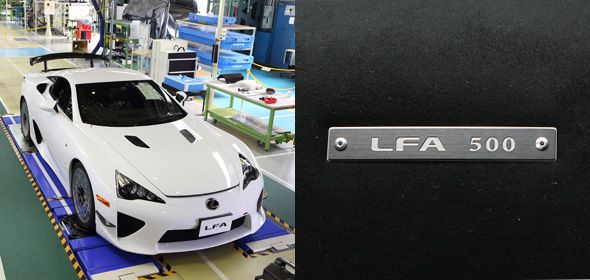
On December 14 the last, 500th LFA was completed and will be delivered to its owner after final inspection and road testing, marking an era for Lexus.
 
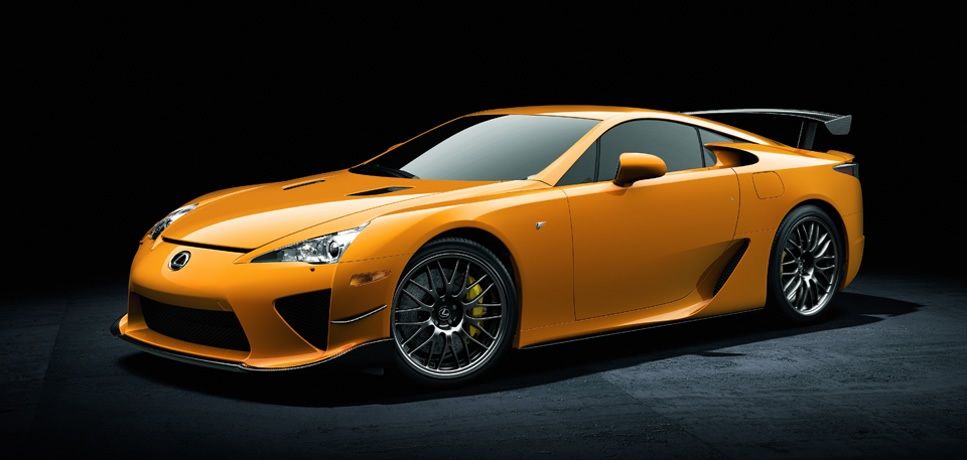
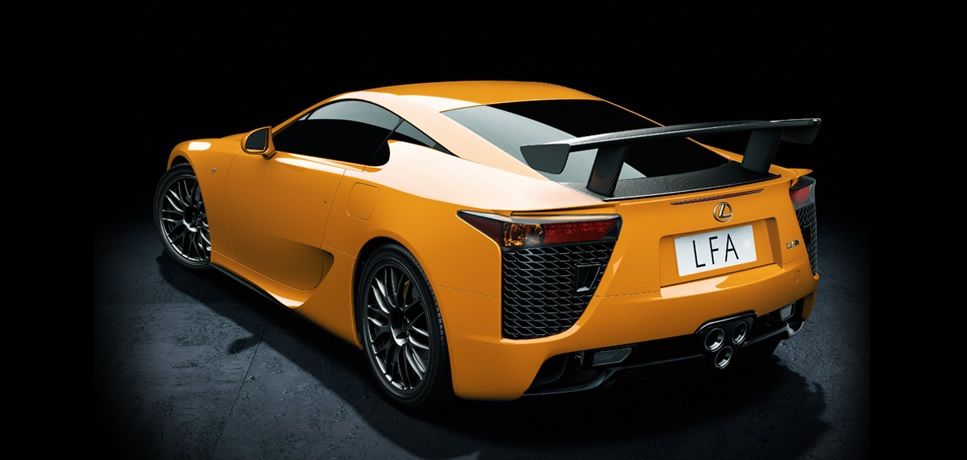
This car was a white right hand drive LFA Nurburgring Edition, with a hand built 4.8liter V10 engine producing over 550hp and 480Nm (354lb/ft) connected to a six-speed automated sequential gearbox (ASG) making the car reach 100km/h in less than 4 seconds.
Each car took one day to be done and production started December 2010, while production of the LFA Nürburgring Package started in January 2012 with only 50 cars built until today.
Lexus says future vehicles will use what was learned from the LFA, including the design and the production of carbon fiber reinforced plastic parts.
さようなら

Source: Lexus


Production of the Lexus LFA ends.

Read more »

Sunday, October 13, 2013

2013 Aston Martin V12 Zagato Price 450 000

The 2013 Aston Martin V12 Zagato is one of the latest version of 2013 Aston Martin. The new 2013 Aston Martin V12 Zagato has a flowing and elegant exterior that has its hood, double-bubble roof and doors formed from aluminum, while the fenders and trunklid are constructed of carbon fiber. 

With lessons learned from the carmaker’s ultra-exclusive One-77 supercar, the 2013 Aston Martin V12 Zagato takes approximately 2000 hours to complete, nearly 100 hours of which are dedicated to the painting process. There are four colors to choose from 2013 Aston Martin V12 Zagato, silver, green, blue and red. The 2013 Aston Martin V12 Zagato can sprint from 0–60 mph in 4.1 sec., with a top speed of 190 mph.

Motivating the 2013 Aston Martin V12 Zagatos 3700-lb. curb weight is the familiar powertrain seen in the Aston Martin V12 Vantage. The 2013 Aston Martin V12 Zagato has all-alloy dohc 5.9-liter V-12 is rated at 510 bhp and 420 lb.-ft. of torque. A 6-speed manual transmission puts the power down to the asphalt via a limited-slip differential driving 19-in. rear tires. According to the factory, the 2013 Aston Martin V12 Zagato can sprint from 0–60 mph in 4.1 sec., with a top speed of 190 mph. The 2013 Aston Martin V12 Zagato is not homologated for the U.S., but if you had $450,000 or so to spend on the car, you might have the means to import the car yourself, though not for road use. First deliveries are expected this fall.

Read more »

Friday, October 11, 2013

2012 Buick Verano Price of 21 000

2012 Buick Verano is newest version of 2012 Buick. The 2012 Buick Verano is a luxury compact sedan, and the third model brand new in the last two years. The 2012 Buick Verano is the first in the compact luxury section and GM says the 2012 Buick Verano will be priced between $21,000 and $26,000.

2012 Buick Verano propose luxury combined with technology, with a few features, as well as dual-zone climate control, heated steering wheel, heated leather seats, 10 airbags, press the start button. The 2012 Buick Verano is a standard with a 2.4L Ecotec engine connected to a 6-speed automatic, which in terms of presentation will offer around 177 HP (132 kW) and 170 lb-ft of torque.

Upon Production, 2012 Buick Verano is in four trim levels a base version, prepared with a 2.4-liter four-cylinder engine and six-speed automatic transmission; two midlevel variants, and featuring leather upholstery, heated seats and steering wheel, 18-inch wheels and tires, Bose premium audio, push-button/remote start, rear park assist and dual climate controls of 2012 Buick Verano.

Read more »

Wednesday, October 9, 2013

2011 Audi R8 Spyder 4 2 FSI quattro

The free-breathing 4.2 FSI is a high-performance engine such as can be found in racing. It delivers an experience that enthralls all of the senses - with spontaneous, voracious throttle response, with its easy revving, with hefty torque, prodigious power and sonorous, voluminous music.
The V8 accelerates the Audi R8 Spyder from zero to 100 km/h (62.14 mph) in 4.8 seconds and on up to a top speed of 300 km/h (185.79 mph). Both values apply for the manual transmission and for the R tronic. At Audi, dynamics also always means efficiency. The Audi R8 Spyder 4.2 FSI quattro with the R tronic
 consumes on average 13.9 liters of fuel per 100 km (16.92 US mpg); fuel consumption with the manual transmission is 14.9 liters per 100 km (15.79 US mpg). A recuperation system that recovers energy during braking is standard. The forced oil pump of the dry sump lubrication system features various suction and discharge stages for load-dependent operation.
The 4.2 FSI  produces 316 kW (430 hp) from a displacement of 4,163 cc - 73.5 kW (103.2 hp) per liter. At the nominal engine speed of 7,900 rpm, the long-stroke (bore x stroke 84.5 x 92.8 millimeters [3.33 x 3.65 in]) engines eight pistons travel 24.1 meters (79 ft) each second. The electronic rev limiter kicks in at 8,250 rpm. The V8 delivers 430 Nm (317.15 lb-ft) of torque to the crankshaft between 4,500 and 6,000 rpm, with at least 90 percent of peak torque available between 3,500 and 7,500 rpm.
The compact V8, which is hand-assembled at the engine factory in Gy�r, Hungary, has the classic cylinder angle of 90 degrees and weighs just 216 kilograms (476 lb). Its crankcase is made of an aluminum-silicon alloy using the low-pressure die casting method, which ensures particular homogeneity. The high silicon
 content makes the cylinder barrels extremely resistant to wear A bedplate structure gives the crankcase its high rigidity and optimal vibration behavior. The cast iron bearing bridges reduce its thermal expansion and thus keep the play at the main bearings of the crankshaft within tight limits. The forged crankshaft, the forged steel connecting rods and the forged aluminum pistons are extremely lightweight, yet strong. The dry sump lubrication system with its separate oil tank enables the engine to be installed very low while also ensuring the supply of oil to the engine even under extreme lateral acceleration
.
The high-revving V8 FSI draws its fuel from an FSI gasoline direct injection system - typically Audi. The common rail unit injects the fuel at up to 120 bars of pressure. The fuel mixture is swirled intensely in the combustion chambers and thus cools the walls. This allows a high compression of 12.5:1, for increased performance and efficiency. The 32 valves are actuated via roller cam followers by four camshafts, each of which can be moved through 42 degrees of crankshaft rotation. They and the ancillaries are driven by zero-maintenance chains running on the back side of the engine


2011 Audi R8 Spyder 4.2 FSI quattro

Read more »

Sunday, October 6, 2013

2012 Toyota Camry


Toyota introduced the all-new, seventh-generation Toyota Camry, sophisticated design with a larger interior, improved driving dynamics and even quieter than before. With class-leading safety, fuel economy and multi-media technology, the end result is the best Toyota Camry ever made.

Toyota Camry offers three powertrain choices, which have all been upgraded in 2012 to provide better fuel economy and performance is more responsive.
All Camry models with a 2.5 liter four-cylinder revision now offers 178 horsepower, an increase of nine hp and 170 lb.-ft. peak torque. 2.5-liter engine uses Dual VVT-i (Dual Variable Valve Timing-intelligent), which controls valve timing on both intake and exhaust camshafts for optimal performance and efficiency at all engine speeds. The Acoustic Control Induction System (ACIS) helps optimize the torque at a wide range of engine speed.

2012 Toyota Camry has a simple yet elegant form of modern, emphasizing stance, wider lower than the previous model. Headlights show a more dynamic, with a pronounced curvature of the main-beam unit incorporates a bumper cover. Fog lamps are standard on the XLE and SE. Rear light clusters wrap tightly to the side of the body, with the top panel and extending to the trunk.


2012 Toyota Camry offers a more attractive interior and spacious. A new dashboard design, location of seats modified, redesigned seats and "lean" the door, the main pillar and trim all combine to add both real space and a greater perception of spaciousness while also increasing visibility to the outside. Reposition the drivers seat and wheel tilt / telescoping steering standard (tilt has increased 33 percent for greater driver comfort) also helps improve visibility to the front and the drivers position.  


Read more »

Friday, October 4, 2013

2012 Infiniti IPL G Coupe Review And Prices

The 2012 Infiniti IPL G Coupe is one of the latest version of 2012 Infiniti. A 2012 Infiniti IPL G Coupe is a 2-door, 4-passenger luxury sports car, available in two trims, the 2012 Infiniti IPL G Base and the2012 Infiniti IPL G 6MT. The 2012 Infiniti IPL G Coupe is available at price of $49,350 - $51,250.

Upon introduction, the 2012 Infiniti IPL G Base is equipped with a standard 3.7-liter, V6, 348-horsepower engine that achieves 19-mpg in the city and 27-mpg on the highway. A 7-speed automatic transmission with overdrive is standard. The 2012 Infiniti IPL G 6MT is equipped with a standard 3.7-liter, V6, 348-horsepower engine that achieves 17-mpg in the city and 25-mpg.

A 6-speed manual transmission with overdrive is standard. The 2012 Infiniti IPL G Coupe is offered in just two exterior colors: Graphite Shadow and Malbec Black. The new 2012 Infiniti IPL G Coupe features special aerodynamic styling pieces, the dynamic performance of an IPL-tuned V6, exhaust and suspension, 19 inch IPL aluminum alloy wheels, and unique leather-appointed interior along with the G Convertibles three piece retractable hardtop. The rear seat includes fixed head rests with rear Pop-up Roll Bars. The G Convertible also features reinforced front side members, front pillars and body sills.

Read more »

Wednesday, October 2, 2013

Asia Car Review Auto Watch Manufacturers

Asia Car

Asian automobile manufacturing market is much broader than many American consumers understand it to be. In addition to Honda, Hyundai, Toyota, and the names of other household there are quite a few cars are growing in size and respectability in their own markets. Two of these companies have committed to selling their models in the U.S., but there are three other people know about and watch the value.

Starting in 2007, two Chinese automobile manufacturers will be exporting cars to the United States and Canada. Geely Automobile Company and the Chery Automobile Company are part of the first wave of new Asian car preparing to serve the U.S. market. I will not go into further detail about the two manufacturers, so please read the related article I wrote titled, "Car China: Defining Markets," to learn more about them.

Proton - Proton Holdings, the parent company of Proton Motors, is the largest producer of vehicles in Malaysia. Volkswagen and Proton signed a strategic partnership agreement in October 2004 in which Volkswagen will be built on Proton assembly lines began in 2006. Apart from the VW venture, Proton has a line of its own model consisting primarily of subcompact and compact sized vehicles. Proton is currently exported to Australia and companies targeting the U.S. market perhaps as early as 2010. In addition to its VW relationship, Japanese automaker Mitsubishi owns nearly 16% stake in Proton.
Hindustan - Since 1950, Hindustan Motors has built cars for the Indian market. Their current line of the car, looked as if they were built in the 1950s, does not match the current world styling standards. However, the growing Indian economy has provided tremendous growth in all business sectors and the Indian automotive industry is ripe for renewal. Ambassador Grand, one such model, has recently been updated to meet current European emissions standards. Look for Hindustan model will be exported to Europe first before taking on the highly competitive U.S. market.

Tata - Unlike Hindustan Motors, Indias Tata Motors is currently producing cars that look as if they were newly designed. As the only Indian car company featuring cars built and designed by India, the companys Indica V2 and Indigo compacts have been well received at the Geneva Auto Show. Plans to export directly to the U.S. have been considered but Tata cars may be the U.S. under another label before it, such as Ford or Dodge.

Outside the five other state companies run automobile manufacturing companies sprung up in communist controlled China. If Geely and Chery succeed, make more will follow and the floodgates will open.
Read more »